The Shape of Experimentation: Seren Wagstaff Reflects on their Artist Residency
Q&A Session with Seren Wagstaff
Interview by Tess Bakharia, Curator
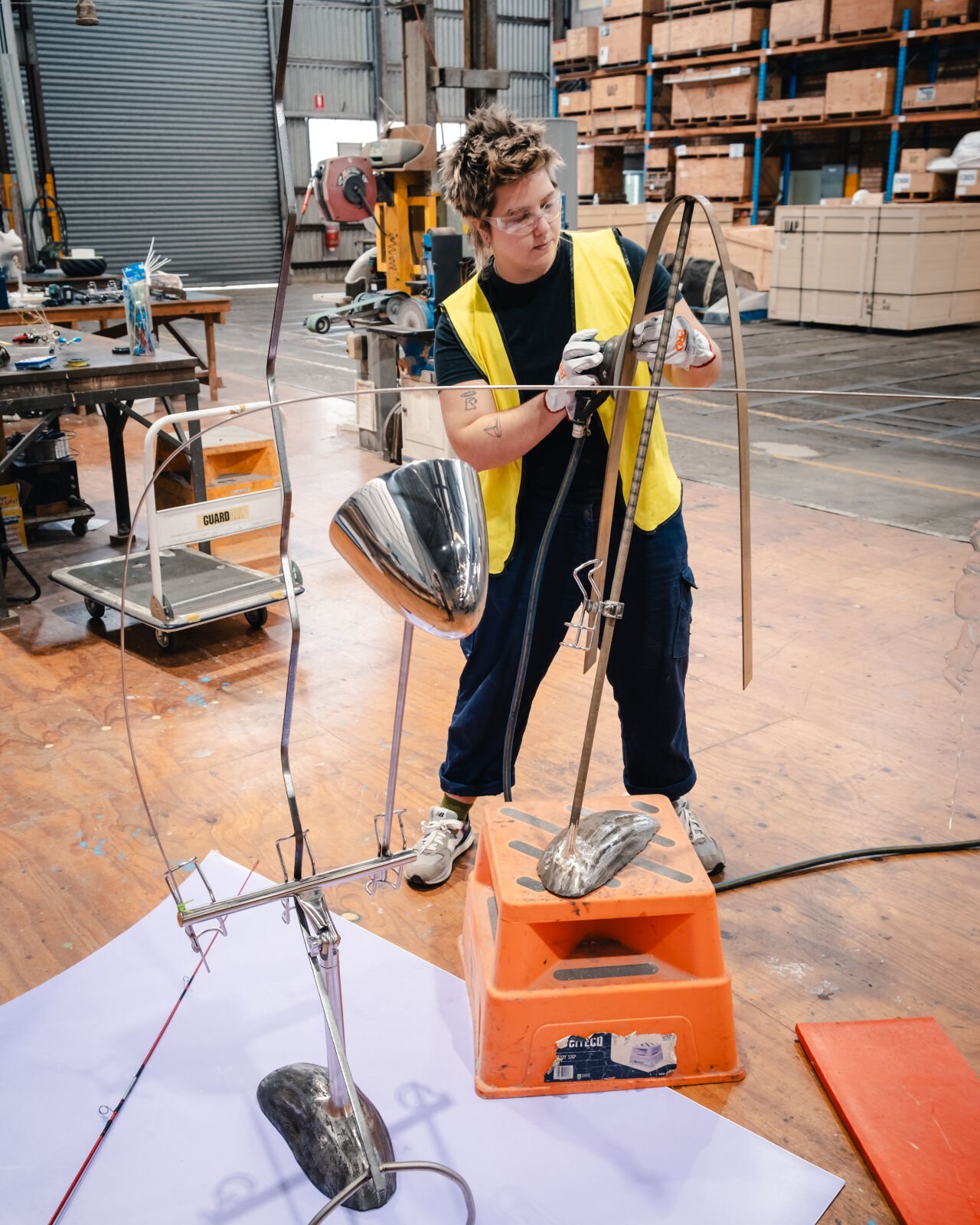
Seren Wagstaff stepped inside our Brisbane foundry to explore the space between experimentation and resolution. From bronze-cast fishing rods to speculative public artworks populated by sculptural cats, Wagstaff embraced the possibilities of working within an environment typically associated with precision and production. In this conversation with UAP Curator Tess Bakharia, Wagstaff reflects on intuition, material discovery, and the experience of navigating physical making with advanced manufacturing technologies.
Tess Bakharia (TB): You’ve been making big moves in your artistic practice over the last few years, the highlights of which include a collaborative exhibition, Lure, with Joseph Botica at Outer Space in 2024, a relocation from Brisbane/Magandjin to Sydney/Gadigal Country, and your recent exhibition at the Institute of Modern Art (IMA) in Platform 2026. Off the back of these milestones, what was your mindset coming into the UAP Artist Residency?
Seren Wagstaff (SW): Off the back of those projects and transitions and stepping into the residency, I felt this new confidence to return to the drawing board. With these works I have been making over the past few years in different locations, the common threads between them all were starting to show. So I trusted myself to be a bit clueless stepping into such a specialist area. I tend to act more clueless when I'm trying to learn the most, so I knew I wanted to do everything possible.
I think I also came into the residency expecting a certain amount of resistance. A lot of my practice involves interrupting or misusing utilitarian objects and spaces. Sometimes I have tried to step into manufacturing spaces to make an artwork or document the space, and it can feel like a bit of an untouchable industry, not one to always welcome experimentation and artistic intuition. Not many places want an overly enthusiastic, often times delusional emerging artist in such a space.
From the outside, UAP appeared to operate within that same logic of high productivity, elbow grease and precision, but my mindset shifted pretty quickly beyond those assumptions when I arrived. Rather than feeling like I was prodding at the edges of an industrial environment, I was met with a genuine desire to experiment and cause a bit of creative mischief. That was a totally new experience for me. I’d already been working with objects and materials tied to utility and systems of production, but this was the first time I was able to properly work from inside that environment rather than responding to it from the outside.
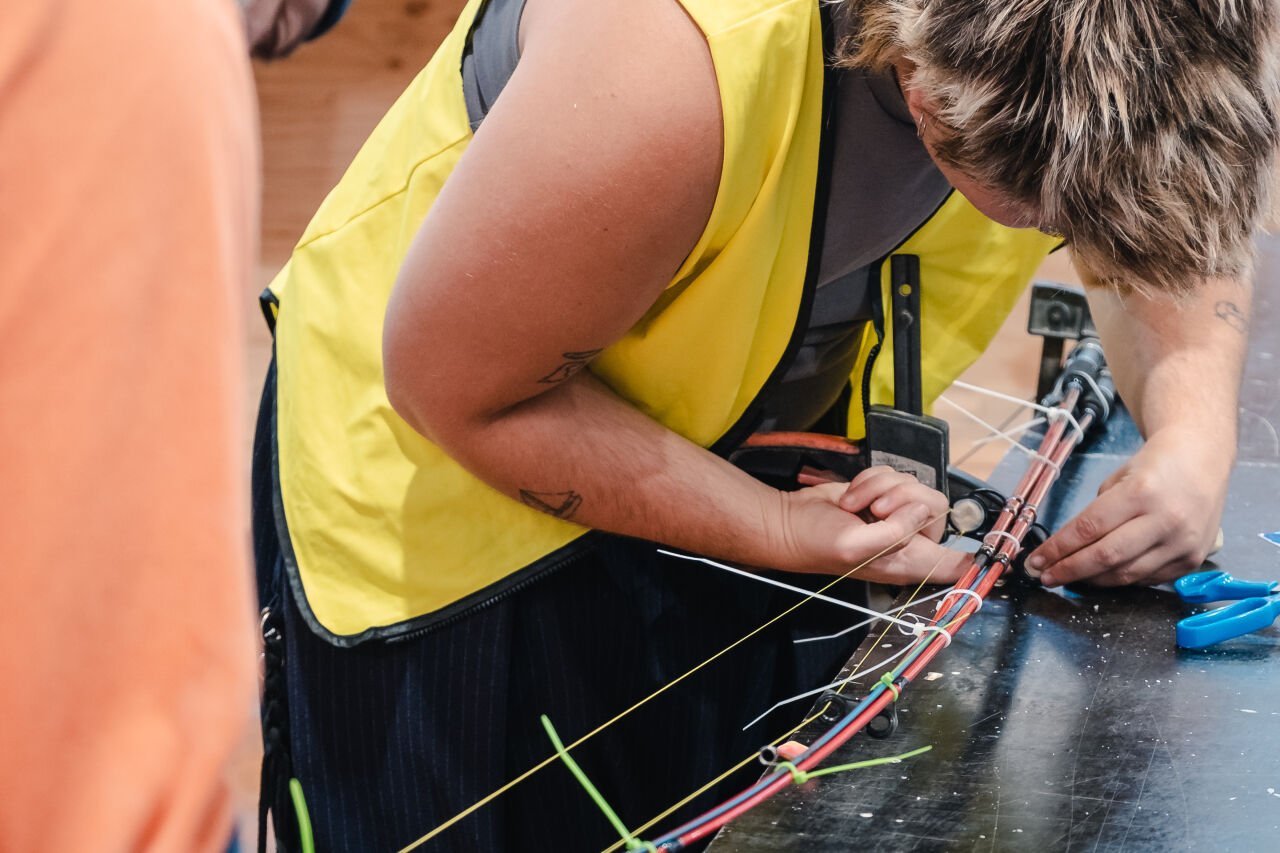
(TB): Sculpture and tactile exploration are central to your practice, and your work is often developed through hands-on engagement with materials and processes. Can you tell us more about your artistic process?
(SW): A lot of my process begins with spending time with materials, following their associations, and seeing what they suggest before I impose too much of my own agenda onto them. From there, the work develops from testing how contrasting materials and movement can exist together. Often, the final work is where that process happens to settle for a moment in time.
(TB): What was your focus for the artist residency? What did you hope to achieve conceptually and/or tangibly?
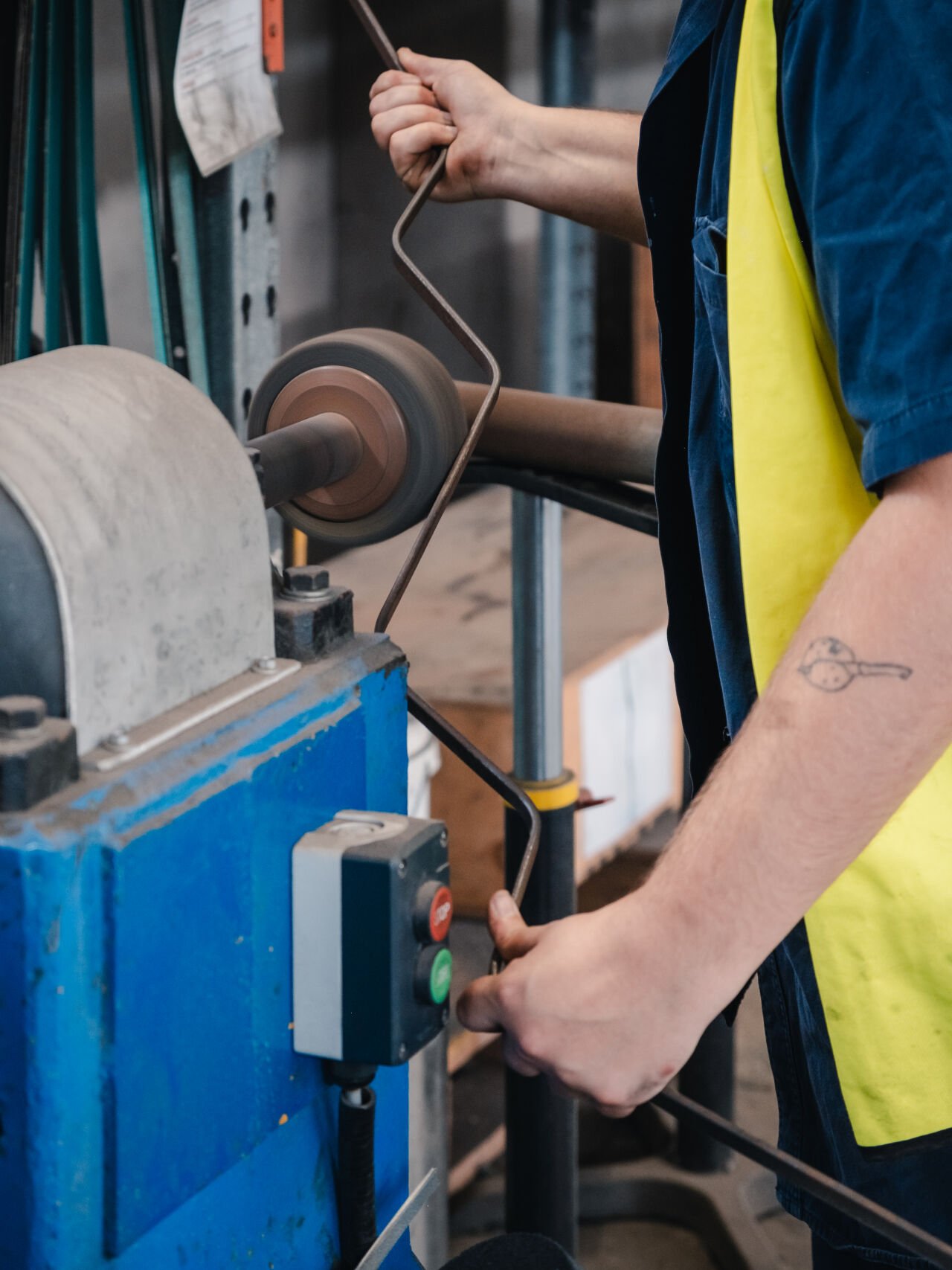
(SW): The residency began with an interest in forms of labour that are rarely spectacular. I was keen to re-create conditions of endurance and anticipation through evolving foundry processes, rather than relying on a kinetic system to perform those ideas. I was looking to simplify parts of my practice and create an opportunity to elevate transitional states that are brief and allow them to exist in a more monumental form.
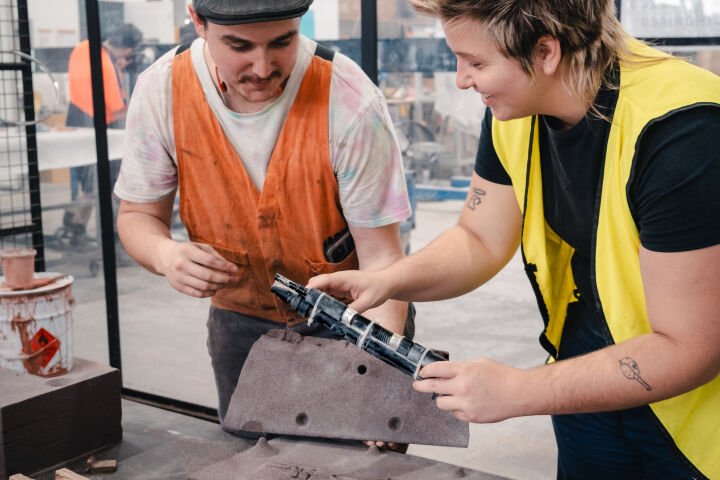
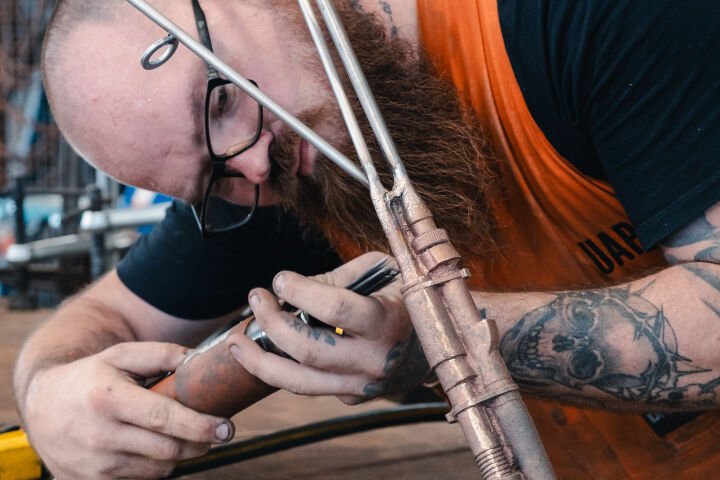
(TB): In preparing for the residency, a key consideration was finding balance between exploration and resolved outcomes. While one of your goals was to lean into the unresolved, it was interesting to watch you move from intensive exploration at the start of your residency to a highly-resolved outcome at the conclusion of the residency with your cast fishing rod assemblage. Now that you’ve completed your residency, how has your perspective on exploration vs. resolution changed?
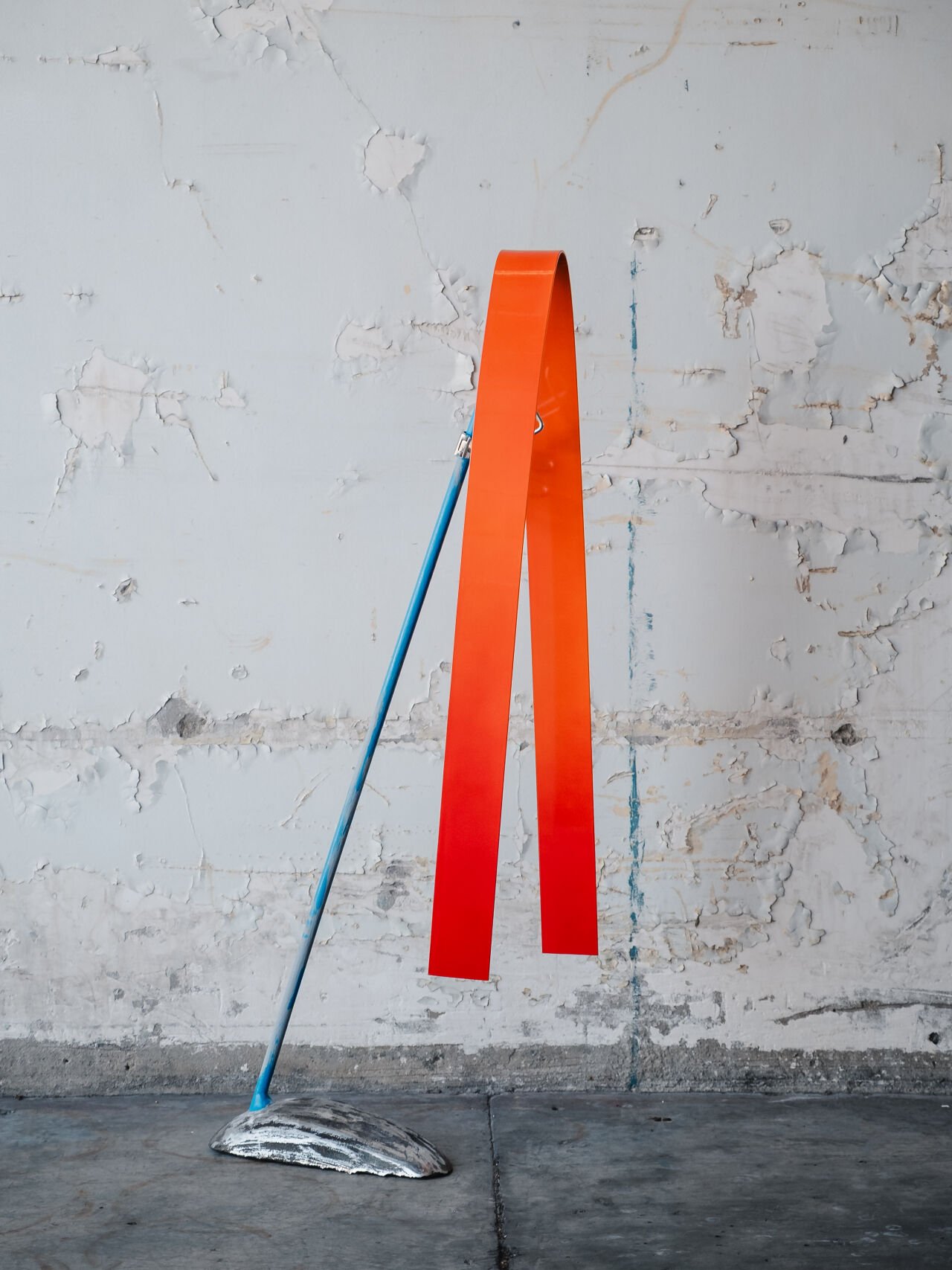
(SW): I guess I started to see the casting processes as a technology of closure. A lot of the time, there is a kinetic element in my works, and that movement is something I see as a material acquisition. Yet with this casting/fabrication process, I knew I would be challenged by the stillness of a new object. Something like a fishing rod, which I was so used to mechanising, all of a sudden was frozen in one material. Seeing the object change and develop so quickly was beautiful and strange. I was surprised at how eager I was to finalise this new form. In hindsight, it was interesting for me to feel some distance toward the cast object. I didn’t pour the bronze; I didn’t make the sand cast mould; my body was pretty much removed from the process. If I make a nice-looking structure or form, usually I’ve spent days sweating to get there, but this was the first time where the commitment was not just my own; the final object carries the effort of many hands.
But ultimately, I think I felt pretty seduced by the whole fabrication process. I’ve made works in the past that completely rely on heat discolouration on steel, but there I was removing all evidence of a process or material change. This form was notable because it complicated earlier assumptions about how I make things. Instead of positioning experimentation and resolution as opposites, I think the casted fabricated form was an attempt to hold both states.
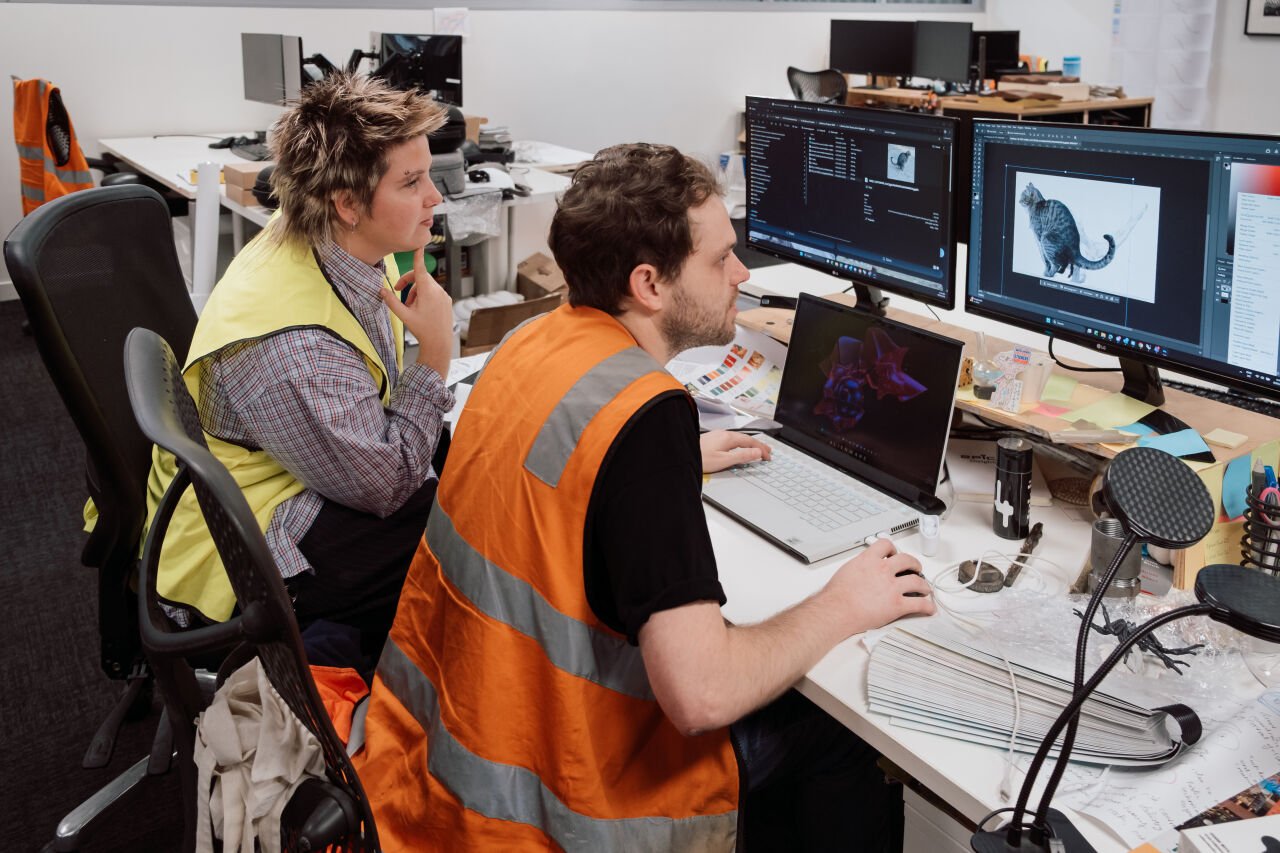
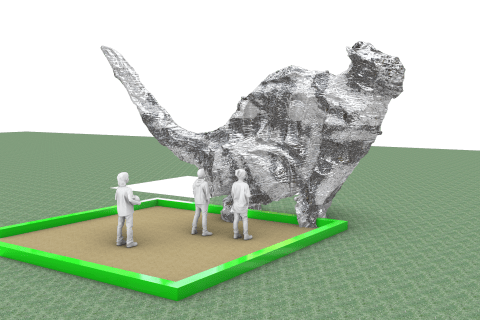
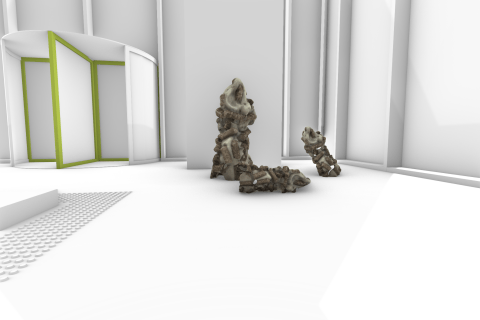
(TB): Part of your residency involved navigating two alternate modes of sculptural practice—physical sculpting, fabrication, painting and material play vs. advanced manufacturing, 3D scanning and 3D printing. What was the experience of working between these two modes, and how did it inform your exploration?
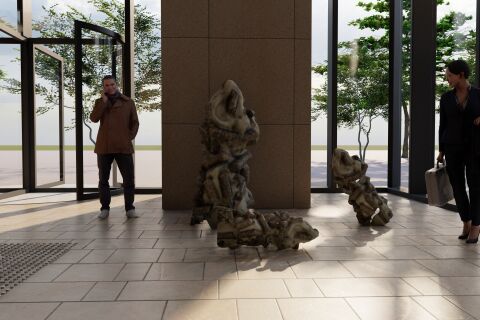
(SW): It was both eye-opening and hilarious. I'd spent a few minutes squishing plasticine and kitty litter in my hand, and suddenly it was enlarged, sitting in a corporate lobby rendered like a major public commission. Something that felt playful, disposable, and unfinished in the studio was immediately afforded a different kind of seriousness once it entered that 3D environment. Seeing such a quick work in progress occupy a new environment highlighted how quickly something provisional can become monumental, big and worthy.
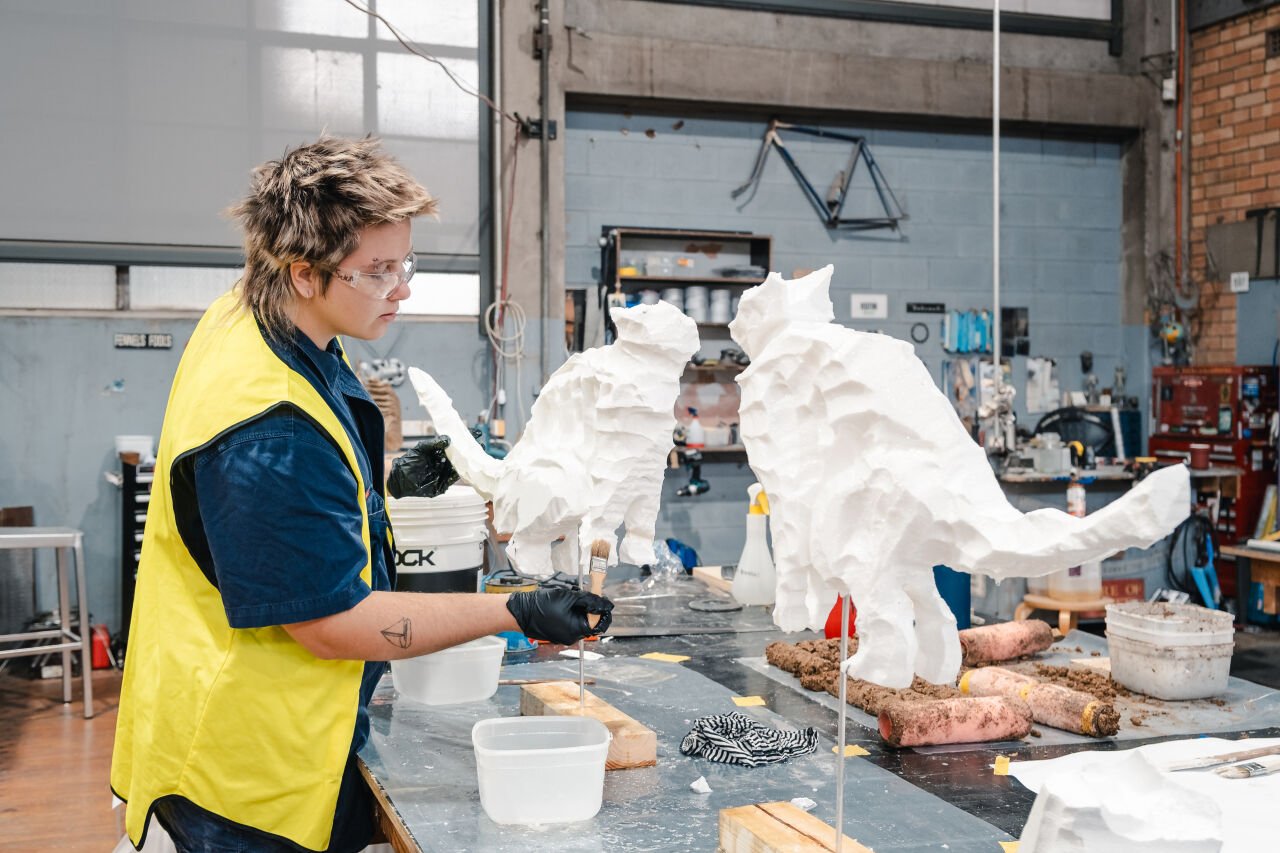
I also carved a series of cats from offcuts of Styrofoam; the cats were positioned as though they were caught in the act of doing a poo. I wanted to capture a body in the midst of process and transition. Again, these rough sculptures moved through UAP’s digital workflow, we scanned my face, and the cats ended up with my own lips, like a 3D collage. These cats were then placed in a 3D environment of an outdoor park we designed, where a public sandpit had now become a large cat's litter tray. What I found most valuable was the ability to use 3D scanning and 3D environments as a tool for world-building. I got to test a world around a sculpture in an instant. It made me think about how public space might accommodate transitional bodies.
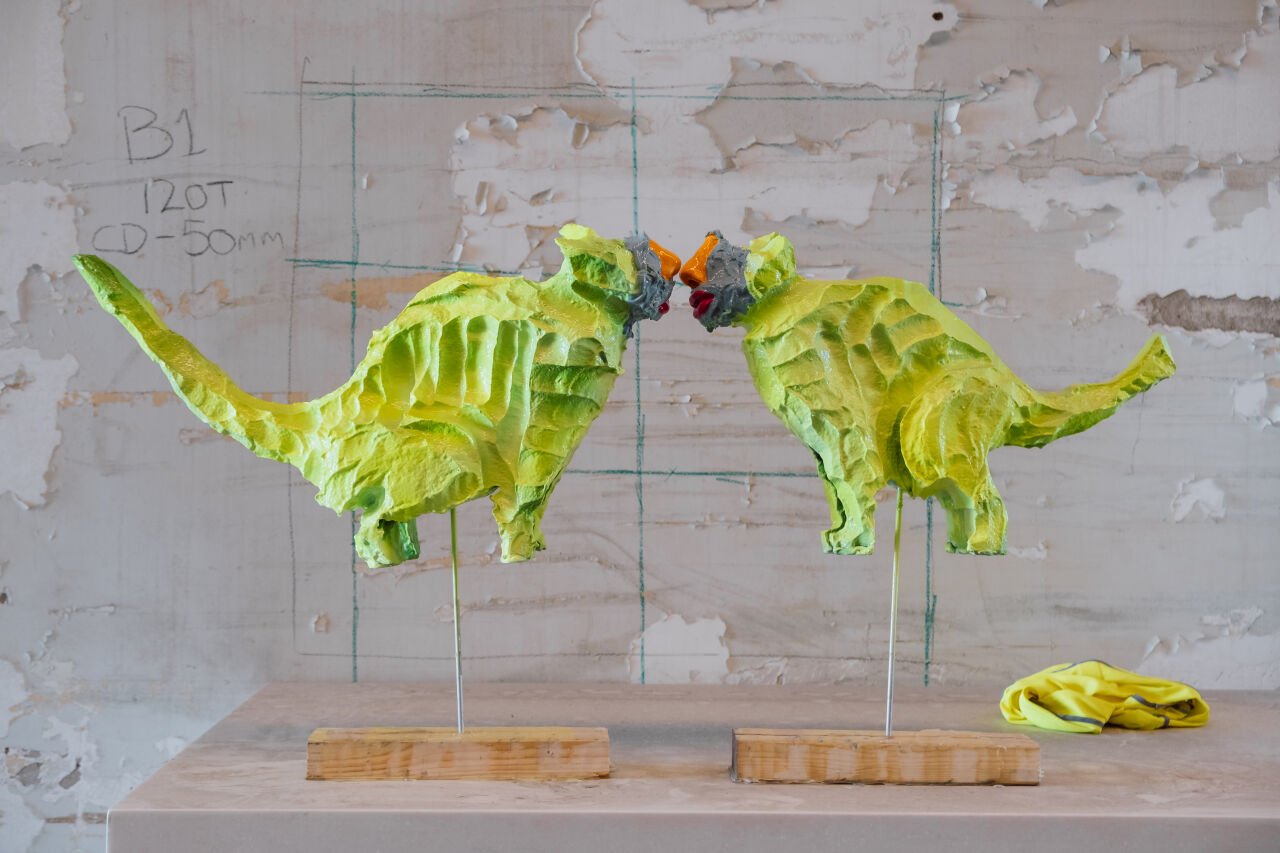
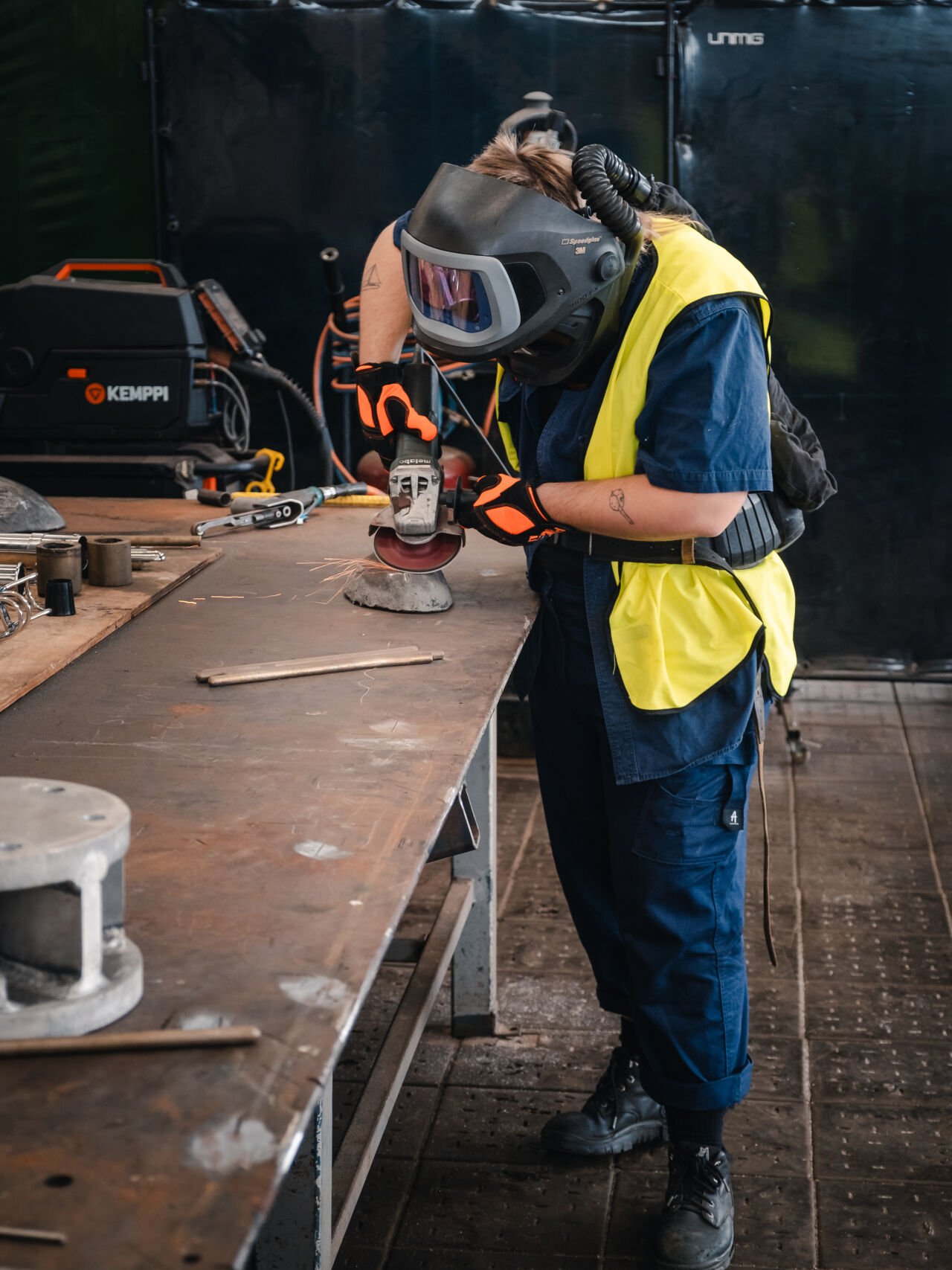
(TB): Having previously practised in workshops and metal-working environments, what new learnings did you find at UAP? How did you engage with the breadth of UAP’s capabilities (pattern making, foundry, design, fabrication, finishing and painting) to realise your ideas?
(SW): I learnt that I do a lot of things wrong. But the residency showed me that intuition has a place alongside utility. I felt like I got to try a bit of everything. One of the perks of being materially ambiguous is that, while I often return to metal, I'm not overly attached to any single process. Despite trying a bit of everything, I probably spent the least amount of time on finishing, which is somewhat ironic in hindsight.
(TB): As the second emerging artist residency held in partnership with Outer Space, the Outer Space team played a key role throughout your residency from start to finish. How has your experience exhibiting with Outer Space and collaborating on the residency informed your artistic practice?
(SW): It feels amazing to continue my relationship with Outer Space after exhibiting there in 2024. I'm constantly changing and growing within my practice, and I feel like Outer Space understands not only how to facilitate that growth, but how to move with an artist as they evolve.
Remaining connected to Outer Space had a direct impact on the work produced in the residency because I know they trust my process. Knowing there was a team excited by my practice gave me the confidence to fully lean into experimentation and spend time testing ideas without wondering where they would end up.
(TB): A new focus area in your practice, which emerged through this residency, is the idea of play and the ways it can be experienced in a public setting. Has this exploration prompted you to reconsider your practice, and what new responses would you expect your work to evoke when experienced in the public realm?
(SW): I think the shift is less that I've become interested in play itself, and more that I've become interested in how a sculpture could inform participation and accessibility. I’ve used performance and social engagement to activate public space, but towards the end of the residency, I reconsidered what accessibility meant to me in my practice accessibility, and how a public sculpture could act more as an invitation rather than an instruction to participate.
I became more open to accessibility as something that creates multiple access points into a work, rather than something that simplifies it. My works are often littered with queer inferences, but I can imagine that taking these innuendos out of the gallery and into the world could evoke a much broader range of responses. Depending on who encounters the work, it might be read as humorous, absurd, vulnerable, offensive or something else entirely. I'm interested in that openness, though. The imagery of the cats doing their business and the lobby-dwelling poo’s began with the strange moral panic around schools and universities supposedly installing litter trays for students who identified as animals. As a queer person, there was something appealing about reclaiming an action that gets mobilised through fear and misunderstanding. These public sculptures mockups don’t try to explain or correct the story. Instead, it’s allowing humour and curiosity to take its place. For me, that curiosity can be just as powerful as an explanation.
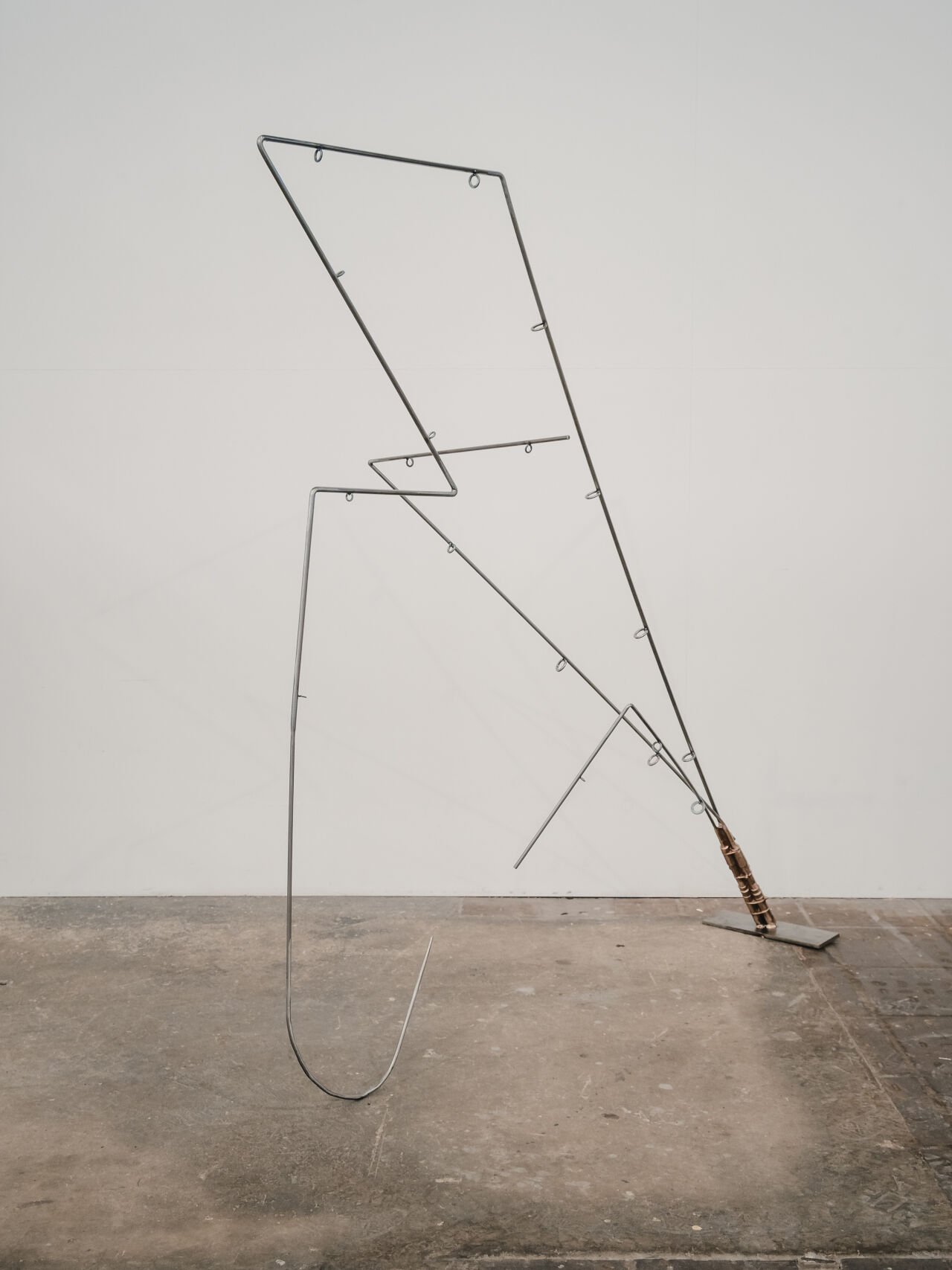
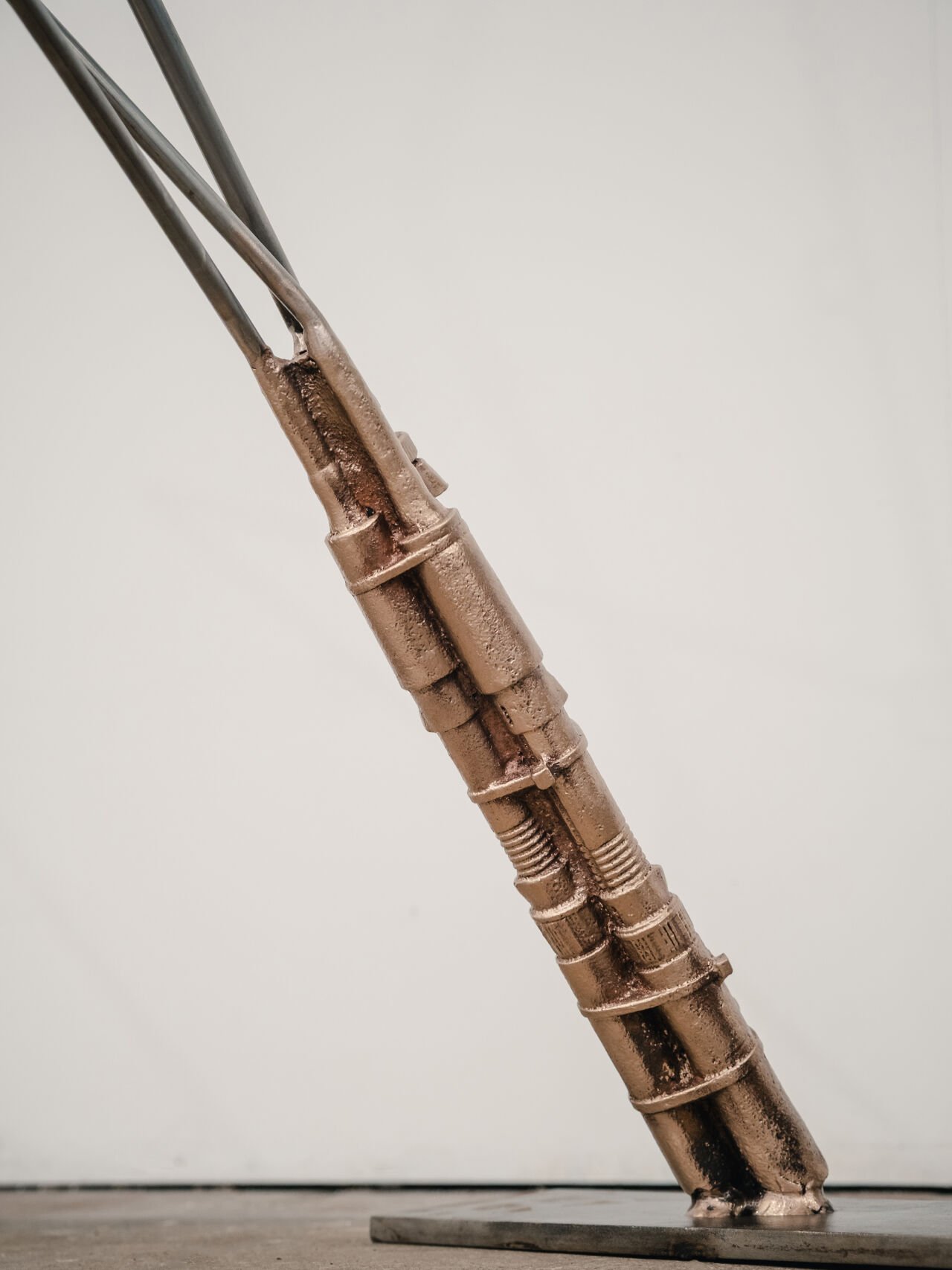
Image Credit: John Nicholson and Rachel See, courtesy of UAP | Urban Art Projects
#Related Articles
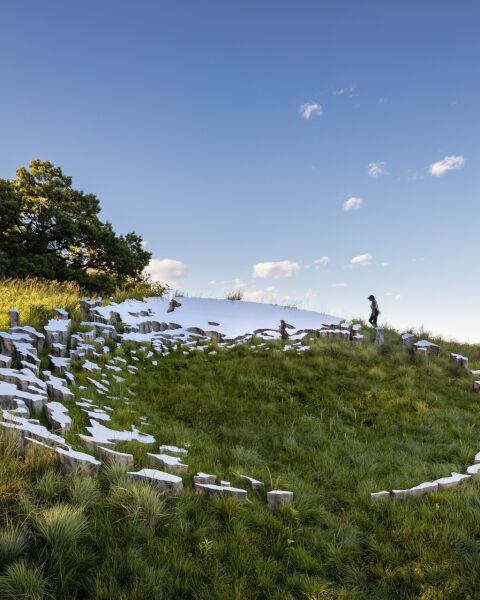
Sarah Sze Embeds Mirrored Installation into Storm King Art Center's Landscape
Sarah Sze has created an 11-metre-wide concave sculpture to capture a pool of reflected sky in the dirt at Storm King Art Center. The work, entitled Fallen Sky, is made up of 132 individual elements with surfaces of mirror-polished stainless steel.
Jeffrey Gibson's Open Studio at The Met
Immersing in the world of AR through the lens of Gibson's artistic practice
Behind the Kiln: The Firing of Raven Halfmoon's Too Ancient to Care
Listen to the story of how a 12ft clay sculpture was fired at our Rock Tavern foundry
An audio interview with Practice Director Jake Joyce