Come and Experience the Big Hose at Goma
Queensland Art Gallery | Gallery of Modern Art
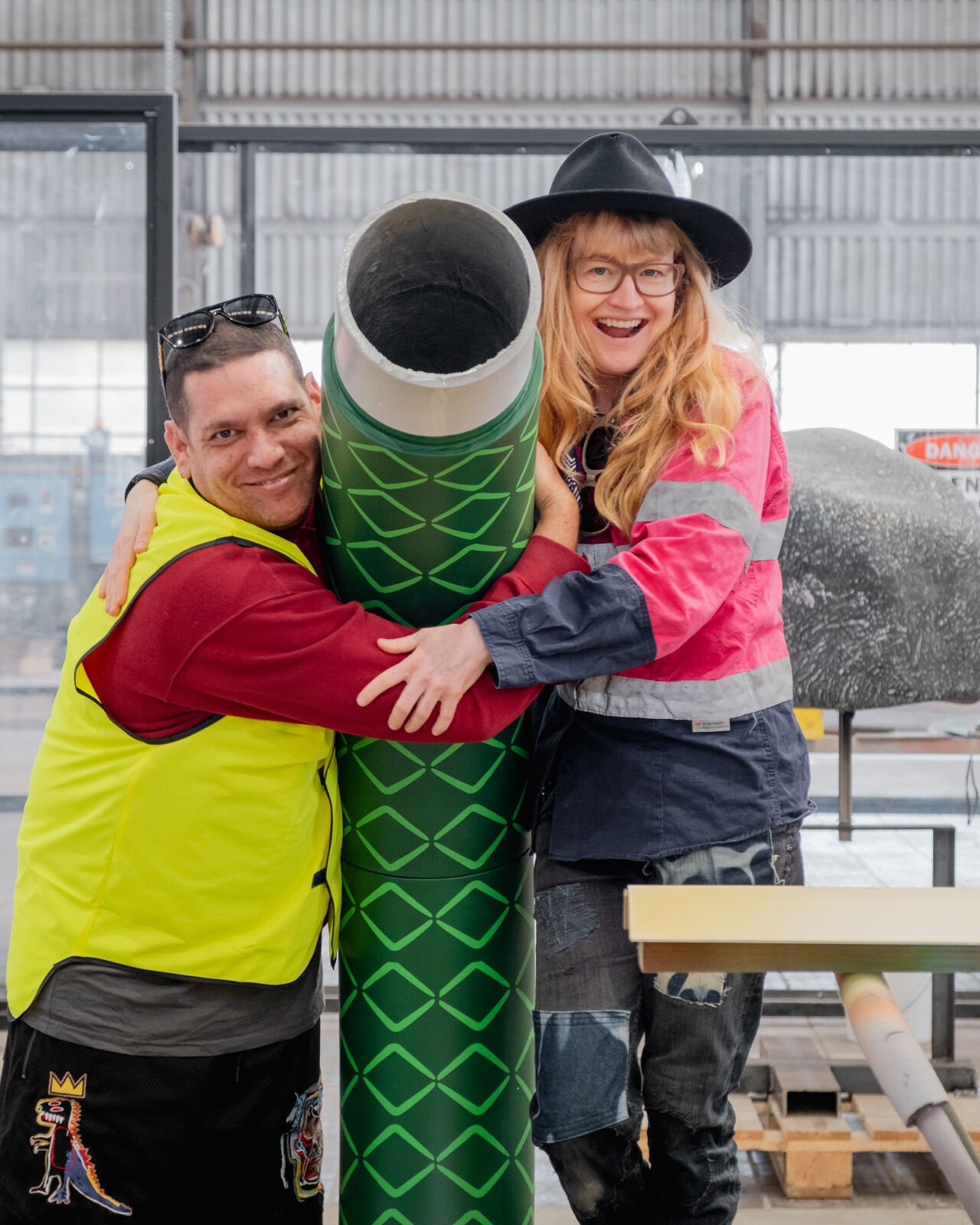
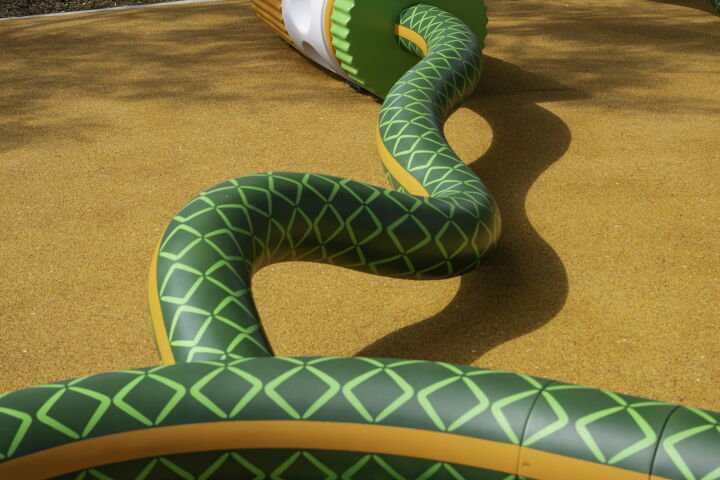
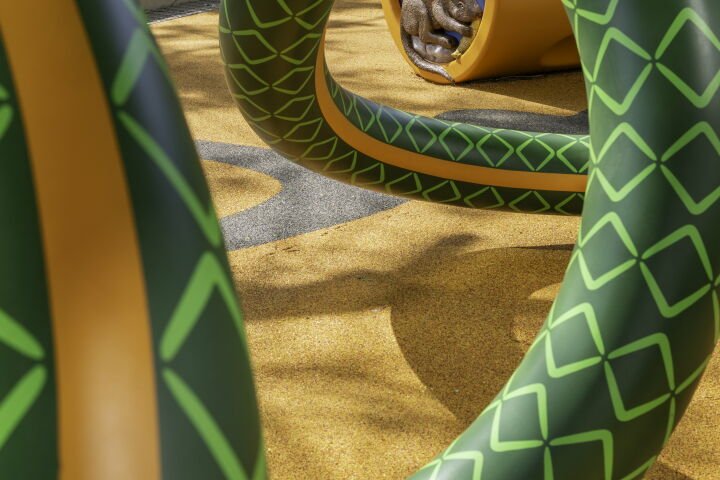
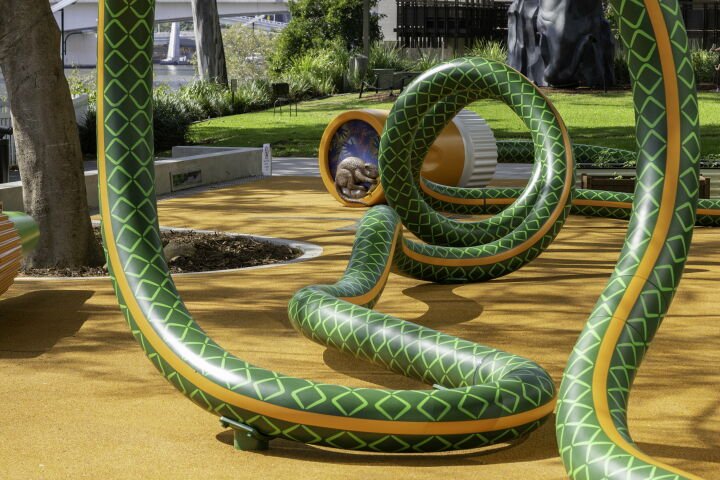
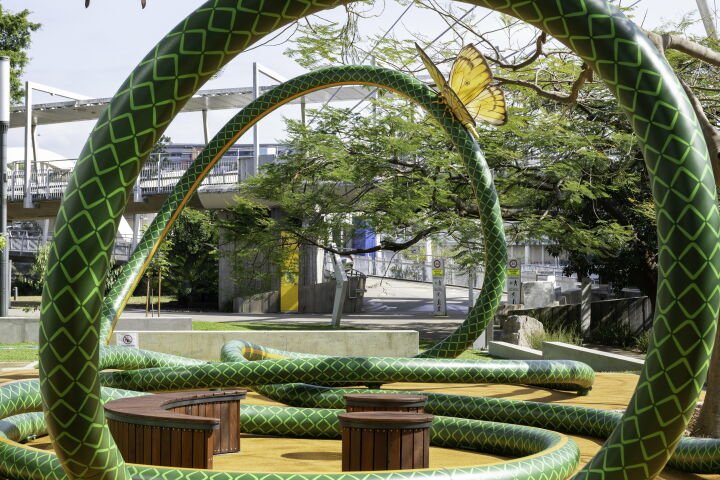
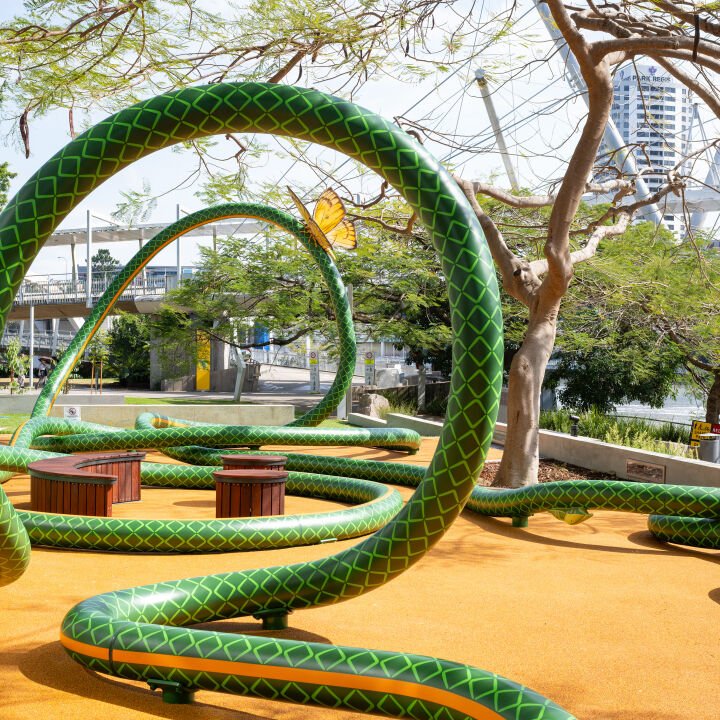
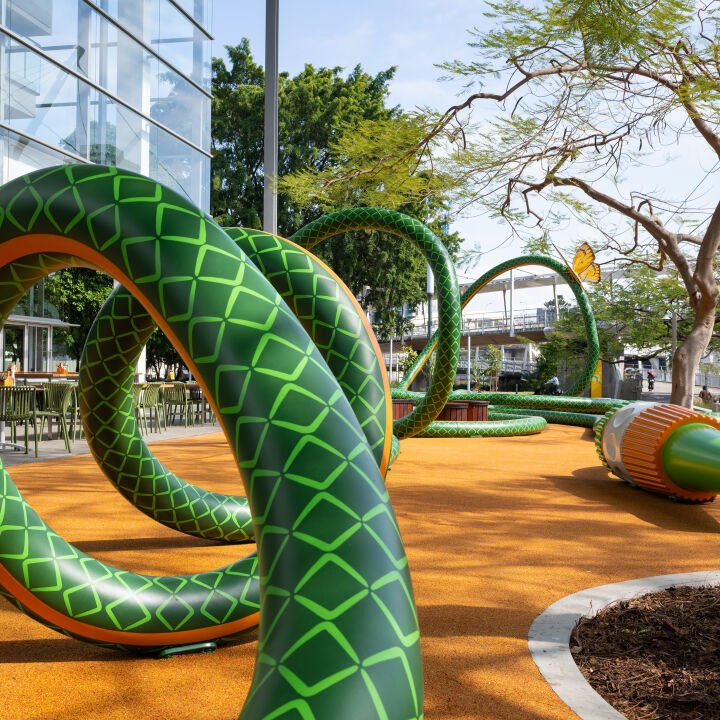
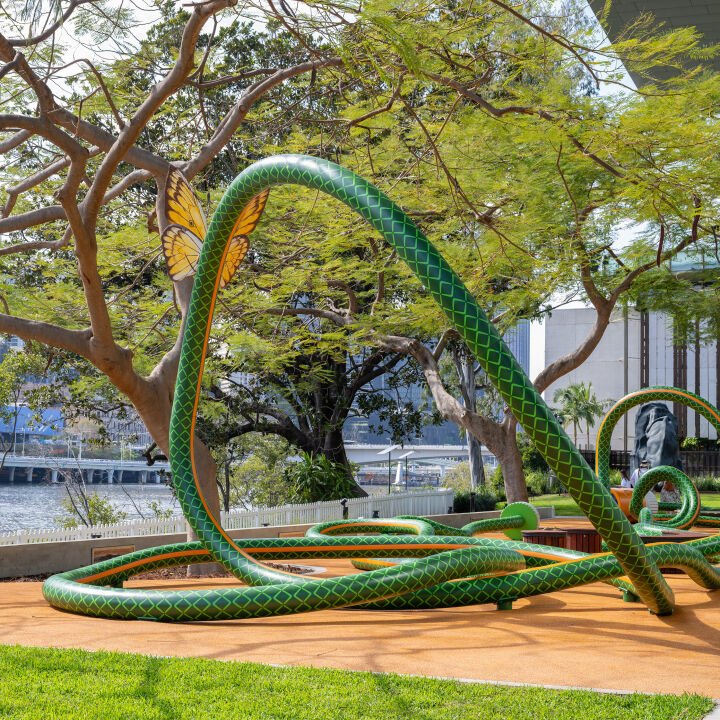
In a first for the Queensland Cultural Centre, an artist-designed play sculpture in the form of an oversized 119 metre-long garden hose has been unveiled outside Brisbane’s Gallery of Modern Art.
Now on permanent display, The Big Hose, a collaborative creation of contemporary Australian artists Tony Albert (Brisbane, Girramay/ Yidinyji/ Kuku Yalanji peoples) and Nell (Sydney), sits on the banks of the Brisbane River at Kurilpa Point, a traditional meeting and trading place for the region’s Turrbal and Yaggera people.
Queensland Art Gallery | Gallery of Modern Art (QAGOMA) Director Chris Saines said The Big Hose alluded to Queensland’s domestic architecture, inhabiting GOMA’s ‘front yard’ and evoking breezy verandahs and subtropical gardens.
‘Building on decades of experience collaborating with artists on projects for its Children’s Art Centre, the Gallery has worked closely with Tony and Nell to develop this unique addition to the precinct, and the artists in turn consulted with traditional custodians of the site on which the sculpture sits,’ Mr Saines said.
‘The artwork’s acknowledgment of the Indigenous history of Kurilpa is key, as is its commitment to children’s learning.
‘Fabricated by UAP Foundry in Brisbane, The Big Hose will spark imaginations and invite discovery in visitors of all ages as the latest in the Australian tradition of landmark “big” things,’ Mr Saines said.
Artist Tony Albert said the sculpture’s home on the edge of the Brisbane River (Maiwar) was also the Story Place of Kuril, the native water rat.
‘The country the artwork sits on, the land between the Brisbane River and GOMA, represents a gateway between these two worlds,’ Mr Albert said.
‘Many children will not have heard of Kuril, and one of the central ideas about the work is creating greater awareness of the thousands of years of Indigenous history of this site, Kurilpa.
‘The journey of the work begins with Kuril’s ‘hose hideout’, where audiences will discover Kuril nestled in the end of the hose attachment – an urban substitute for his native burrow,’ Mr Albert said.
The native water rat, also known in other parts of Australia as ‘Rakali’, was proudly announced recently during National Science Week as Australia’s most underrated animal, something the gallery will highlight in public programs and school resources.
Nell said there was also other strong environmental messages in the work.
‘Visitors may notice there is no tap attached to the hose, rather, the illusion of water is conveyed by the form of the hose, prompting the young viewer to ask: ‘where does the water come from?’,’ Nell said.
‘When visitors look down at the sculpture from inside GOMA, the view of the artwork reveals a simple smiley face looking up at them from within a large circular loop of the hose.’
The Big Hose was made possible by private giving through the QAGOMA Foundation, including generous support from Andrew and Dr Susan King, the Neilson Foundation, Margaret Mittelheuser AM and Cathryn Mittelheuser AM, Gina Fairfax AC, Dr Shirley Hsieh and contributions to the 2022 QAGOMA Foundation Appeal.
The Big Hose is on permanent display outside GOMA.
The refurbished GOMA Bistro, which looks out onto the play sculpture, re-opens with a new menu on from 16 September.
For more info visit www.qagoma.qld.gov.au
#Related Articles
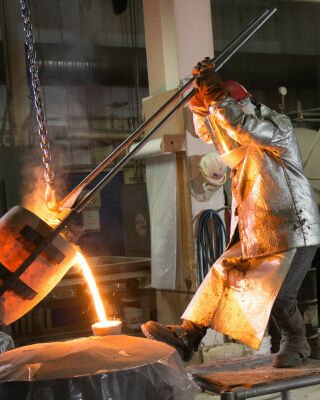
From a Tucked-Away New York Town, This Facility Brings Large-Scale Art to Life
UAP is making an unmissable mark on public space in American cities, fabricating outdoor art and installations from a buzzy foundry upstate.
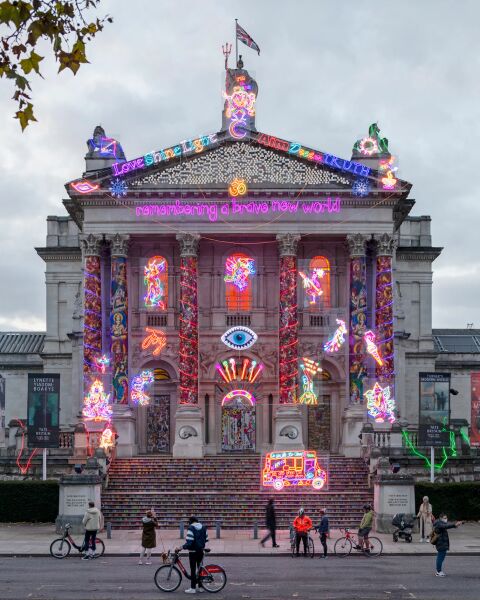
The Best Public Art of 2020
To celebrate the resounding power and meaning of public art, the art-and-design fabrication company UAP has released its annual list of the year’s best public art.
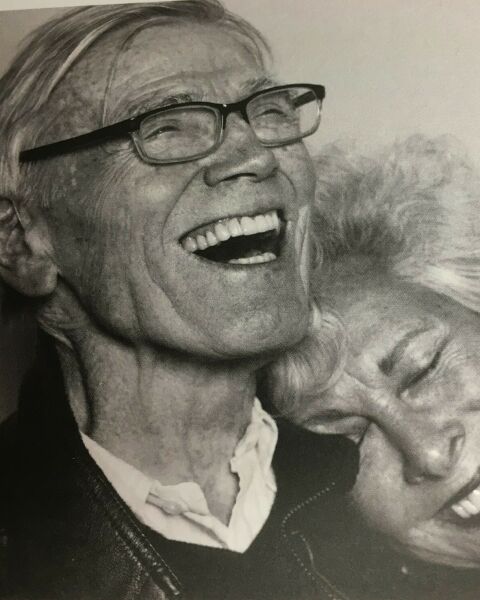
Remembering Dick Polich
On Sunday, November 13, 2022, Richard F. (Dick) Polich passed away peacefully in hospice. He was 90. Polich made an enormous contribution to art over the past 50 years through his art foundries: Tallix, Polich Art Works and Polich Tallix.